
Evaluations and eligibility
Private Testing Versus School Evaluation
Private testing versus school evaluation can shape your child's IEP. Learn what each assessment can show and how to use both to seek services they need.
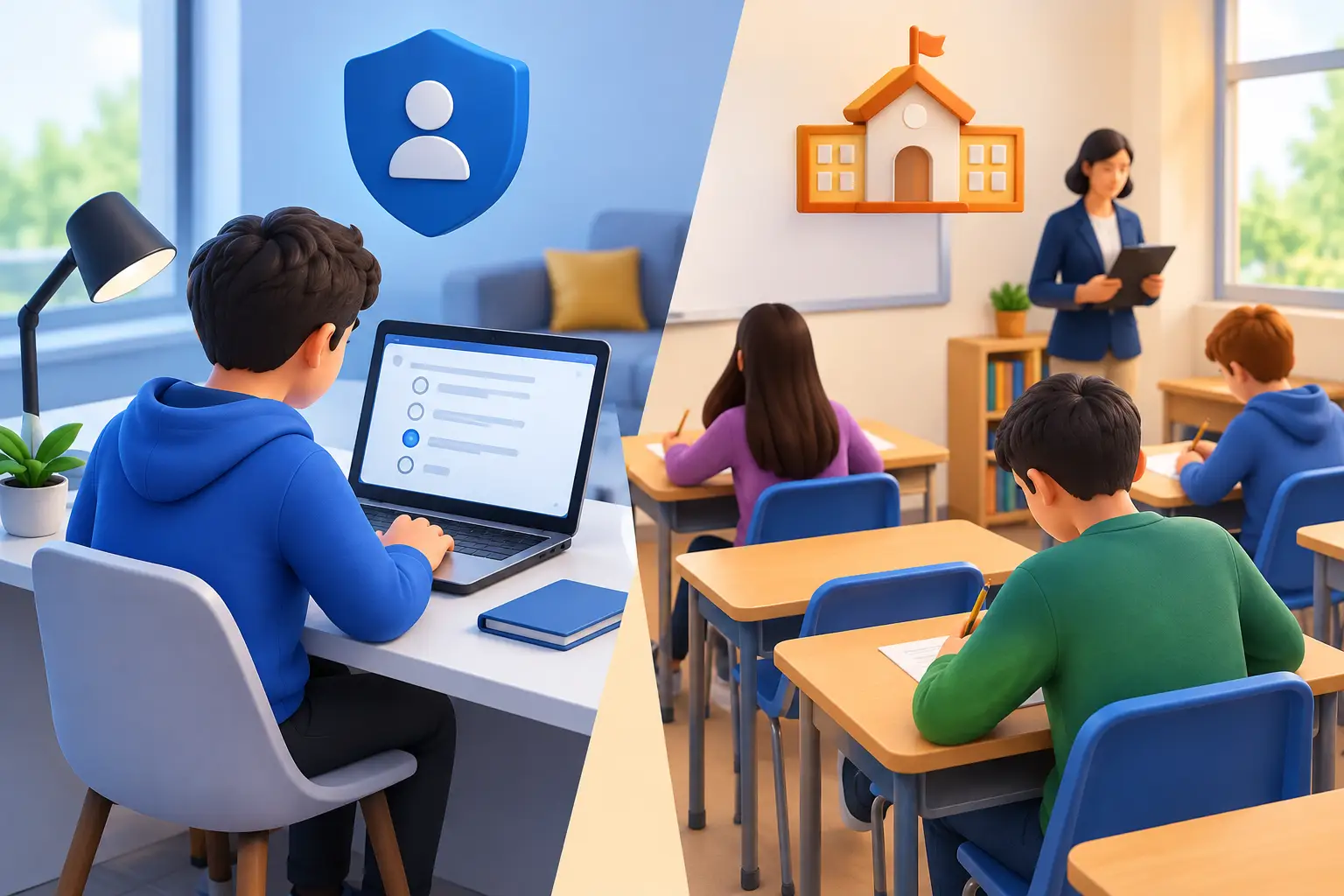
A school team tells you your child is doing "fine," yet homework ends in tears, reading is a daily battle, or behavior is escalating at home. Then a private clinician identifies dyslexia, ADHD, anxiety, autism, or another need that the school’s evaluation did not fully capture. Private testing versus school evaluation can feel like a battle over whose opinion counts. It should not be. The real question is whether the information accurately identifies your child’s needs and leads to meaningful support.
Your child is not required to struggle until the school agrees there is a problem. Families have a right to participate in the evaluation process, review the data, ask hard questions, and challenge conclusions that do not match their child’s real-life experience.
Private Testing Versus School Evaluation: Different Jobs
A private evaluation is typically completed by an independent professional, such as a psychologist, neuropsychologist, speech-language pathologist, occupational therapist, developmental pediatrician, or behavior specialist. It may be comprehensive and diagnostic, looking at areas such as cognition, academic skills, attention, executive functioning, language, social communication, emotional functioning, sensory needs, or behavior.
A school evaluation is conducted or arranged by the public school district to determine whether a student qualifies for special education and related services under the Individuals with Disabilities Education Act, commonly called IDEA. The school team is not simply asking, “Does this child have a diagnosis?” It is asking whether the child has a qualifying disability and, because of that disability, needs specially designed instruction.
That difference matters. A child can have a well-supported private diagnosis and still be denied an IEP if the school claims the condition is not adversely affecting educational performance or does not require special education. A child may also qualify for school services without a formal medical diagnosis when the school data shows a disability-related educational need.
Neither pathway is automatically more valid. But they can reveal different parts of the picture, and a school cannot dismiss credible outside information merely because it did not produce it.
What Private Testing Can Offer
Private testing can be especially useful when a child’s needs are complicated, inconsistent, or overlooked in the classroom. Some children work extremely hard to hold it together at school and fall apart at home. Others earn passing grades while struggling with slow processing, organization, written expression, social demands, emotional regulation, or the exhausting effort required to keep up.
A thorough private evaluator may have more time to observe patterns, interview caregivers, review developmental history, and administer a broader set of assessments than a school team can reasonably provide. The report may explain not just that your child is behind or distressed, but why. That explanation can be powerful when you are asking the school to look beyond surface-level performance.
Private reports can also provide specific recommendations. For example, an evaluator may identify the need for explicit reading instruction, speech-language support for pragmatic language, occupational therapy assessment, executive-function support, counseling, reduced written output, or testing accommodations.
Still, private testing has limits. It can be expensive, insurance coverage varies, and not every evaluator understands special education eligibility rules. A detailed clinical report may recommend supports that are helpful but not automatically required in a school setting. Ask prospective evaluators whether they understand IEPs, 504 plans, educational eligibility, and how to write recommendations that connect directly to classroom impact.
What a School Evaluation Must Address
When a parent requests an evaluation, the school must respond. If it agrees, it must obtain your informed consent before conducting the initial evaluation. The evaluation must be sufficiently comprehensive to identify all of your child’s special education and related-service needs, whether or not those needs are commonly linked to the disability category being considered.
That means a school should not limit its assessment to the one issue it finds easiest to test. If your child has reading concerns, attention concerns, anxiety, speech-language issues, and behavior concerns, the evaluation should examine the areas reasonably connected to suspected disability. A quick screening, a single test score, or a teacher’s statement that a child is "passing" may not answer the full question.
School evaluations have strengths of their own. They can include classroom observations, teacher input, curriculum-based measures, district data, and information about how your child functions in the actual educational environment. This is important because eligibility and services must be connected to access and progress at school.
The problem arises when the school evaluates too narrowly, relies on incomplete information, or treats grade-level promotion as proof that no disability exists. Passing from grade to grade does not erase a child’s need for specialized instruction. Nor do good grades automatically show that a child is accessing education without extraordinary effort, tutoring, parental support, or emotional cost.
A Diagnosis Is Not an IEP, but It Is Evidence
Parents are often told, directly or indirectly, that a private diagnosis "does not mean" their child qualifies for an IEP. That statement is technically true, but it is often used to shut down a necessary conversation.
A diagnosis alone does not guarantee special education eligibility. The school must determine whether the disability affects educational performance and creates a need for specially designed instruction. But a diagnosis is still relevant evidence. It may identify conditions the school needs to evaluate, explain why classroom data looks the way it does, and support the need for accommodations, related services, or specialized instruction.
Bring the private report to the school in writing. Ask that it be considered as part of the evaluation record. Do not settle for vague assurances that the team will “take a look.” Request that the report be reviewed before the eligibility meeting and that your concerns and the report’s recommendations be reflected in the meeting discussion.
If the school disagrees with the private evaluator, ask what data supports that disagreement. Is the school using more current information? Did it assess the same areas? Did it observe your child across relevant settings? Is it saying the diagnosis is inaccurate, or merely that the school has not evaluated the educational impact thoroughly enough?
When to Request an Independent Educational Evaluation
If you disagree with the school district’s evaluation, you may have the right to request an Independent Educational Evaluation, or IEE, at public expense. An IEE is conducted by a qualified examiner who is not employed by the school district.
Put your request in writing and state that you disagree with the district’s evaluation. You do not have to provide a detailed defense of your disagreement just to make the request. The district must, without unnecessary delay, either agree to fund the IEE or file for due process to show that its own evaluation is appropriate.
An IEE is not the same thing as any private evaluation you choose to obtain on your own. If you privately arrange testing before requesting an IEE, the district may not be required to reimburse you. However, the district still must consider privately obtained evaluations that meet agency criteria when making decisions about your child.
Before accepting an IEE, ask for the district’s criteria regarding evaluator qualifications, location, and reasonable cost. The district cannot impose unreasonable barriers that prevent you from obtaining an independent evaluation.
How to Use Both Evaluations Strategically
The strongest advocacy is not about collecting reports. It is about connecting evidence to action. Whether information comes from a private clinician, school psychologist, teacher, therapist, or parent, keep bringing the conversation back to what your child needs to access learning and make meaningful progress.
At the meeting, be prepared to ask four direct questions:
- What needs did each evaluation identify?
- Which needs are affecting access, participation, behavior, or progress at school?
- What specially designed instruction, services, accommodations, or supports will address those needs?
- How will the team measure whether the plan is working?
Ask for clear answers, not promises to “monitor” your child without a plan. If the school accepts the diagnosis but offers only general classroom strategies, ask whether those strategies are individualized, consistently delivered, and sufficient to address the documented need. If a support is necessary for your child to learn, it should not depend on a teacher’s goodwill or availability.
Also pay attention to the date and scope of every evaluation. Children change. A report from several years ago may still offer valuable history, but it may not reflect current functioning. On the other hand, a school should not ignore longstanding patterns simply because your child had one better grading period.
You Do Not Have to Accept an Incomplete Picture
Schools have obligations, and parents have a seat at the table. When the school’s evaluation does not explain your child’s struggles, you are allowed to ask for more. When private testing identifies needs the school overlooked, you are allowed to insist that the team consider it. When the evidence points to a need for support, delays and excuses are not an acceptable plan.
Keep your records, put requests in writing, and trust what you are seeing. Your child deserves an evaluation process that looks at the whole child, not the smallest possible slice of the problem. The right question is never which report is more convenient for the system. It is what your child needs to learn, participate, and move forward with dignity.
Personal 1:1 advocacy
Need Help Applying This to Your Child's Situation?
Russell can review the actual records, identify what the school or agency is missing, and help you prepare the strongest next move.
Federal requirements provide a baseline. State law, regulations, guidance, and timelines may differ. This page provides educational advocacy information, not legal advice.
Return to top