
Evaluations and eligibility
RTI Versus Special Education: Know the Difference
RTI versus special education can affect your child's path to services. Learn what each means, when to request an evaluation, and how to respond firmly.
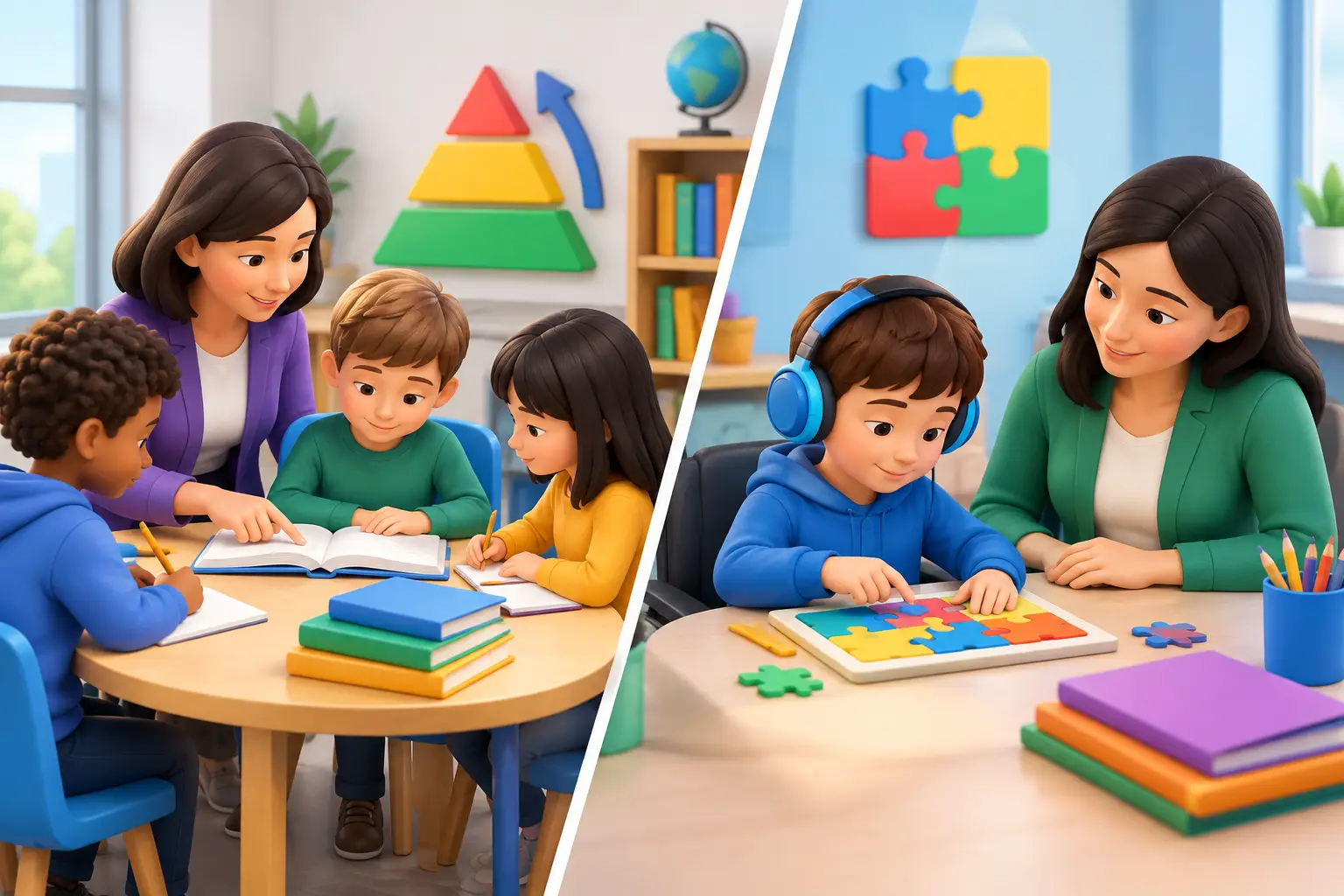
A school may tell you, “Let’s try RTI first,” when your child is struggling. That statement can sound reasonable - until weeks become months and your child is still falling behind. Understanding RTI versus special education helps you ask the right questions, protect your child’s rights, and prevent intervention from becoming an excuse for delay.
RTI can be useful when it is delivered consistently, measured carefully, and adjusted when a child is not progressing. But it is not special education, it is not an IEP, and it cannot replace a timely evaluation when a disability is suspected.
What RTI Is - and What It Is Not
RTI stands for Response to Intervention. It is a general education framework designed to identify students who need more academic or behavioral support and provide help in increasing levels, often called tiers.
At the first tier, a child receives high-quality instruction available to all students. At higher tiers, the school may provide targeted small-group instruction or more intensive individual intervention. The school should monitor your child’s progress using data, not vague impressions such as “She seems to be trying harder” or “Let’s give it more time.”
RTI is often used for reading, math, writing, behavior, or attendance concerns. You may also hear the broader term MTSS, or Multi-Tiered System of Supports. In many schools, RTI is part of MTSS.
Here is the critical point: RTI is a general education support system. Your child does not need to be found eligible under the Individuals with Disabilities Education Act, or IDEA, to receive it. RTI may help a child catch up, but it does not create the legal protections, specialized instruction, measurable IEP goals, or related services that come with special education eligibility.
RTI Versus Special Education: The Key Difference
Special education is a legal entitlement for eligible students with disabilities. Under IDEA, a child must both have a qualifying disability and need specially designed instruction because of that disability. An IEP team then develops an Individualized Education Program that identifies the child’s present levels, goals, services, accommodations, placement, and progress reporting.
RTI asks, “How does the student respond when we increase support?” Special education asks, “Does this student have a disability that requires specially designed instruction?” Those questions can overlap, but they are not interchangeable.
A child can participate in RTI and later qualify for special education. A child can also qualify for special education without first completing every RTI tier. And some children benefit from RTI but do not need an IEP.
The concern arises when a school treats RTI as a waiting room. If the school knows or has reason to suspect that your child may have a disability, it cannot use RTI to postpone an evaluation indefinitely. IDEA allows schools to consider a student’s response to scientific, research-based interventions when identifying a specific learning disability. It does not permit a district to delay or deny an evaluation simply because interventions are still underway.
When RTI Is Helping Your Child
RTI can be a positive step when the plan is specific and transparent. You should know what intervention your child receives, how often it occurs, who provides it, the skill being targeted, and how progress will be measured.
For example, “extra reading help” is not enough information. A meaningful intervention plan might state that your child receives 30 minutes of structured literacy instruction in a small group four times a week, with a reading-fluency measure reviewed every two weeks. That gives everyone something concrete to evaluate.
Ask to see the data. Ask for the baseline, the goal, the progress-monitoring tool, and the dates results will be reviewed. If your child is making meaningful progress and the gap is closing, the intervention may be working. If the data show flat progress, inconsistent delivery, or a widening gap, the school needs to change course.
Do not let a meeting end with “We’ll keep an eye on it.” Ask what will happen next, who is responsible, and when you will meet again. Your child deserves a plan, not a promise.
When You Should Request a Special Education Evaluation
You do not have to wait for the school to suggest testing. A parent or guardian can submit a written request for a comprehensive special education evaluation. Put the request in writing, date it, and clearly state the concerns you see at school and at home.
Consider requesting an evaluation when your child has persistent academic struggles despite interventions, significant difficulty with attention, communication, behavior, social interaction, organization, or daily functioning, or an uneven pattern of skills that is not explained by typical learning differences. A medical diagnosis can be relevant, but a diagnosis alone does not guarantee school eligibility. The question is how the suspected disability affects educational performance and whether your child needs specially designed instruction.
You may request an evaluation while RTI is happening. You do not need permission to make the request, and you do not need to prove eligibility before asking. Your job is to communicate your concerns. The school’s job is to respond appropriately.
After receiving your written request, the district should either seek your consent to evaluate or provide written notice explaining why it refuses. If the school agrees and you provide consent, federal IDEA rules generally require completion of the evaluation within 60 days, although state rules and limited exceptions can affect the timeline. Ask your district which timeline applies and keep copies of every document.
If the school refuses, do not accept a verbal “no” as the final answer. Request Prior Written Notice. This document should explain the action the district refused, the reasons for its decision, the information it used, and the options considered. A written record matters because it turns a hallway conversation into an accountable decision.
Questions to Bring to the School Meeting
Before a meeting, gather report cards, work samples, teacher communications, outside evaluations, behavior records, and your own notes about homework, frustration, sleep, anxiety, or changes at home. Patterns matter. So does the gap between what your child understands and what they can show at school.
Then ask direct questions:
- What intervention is my child receiving, and is it being delivered as planned?
- What data show whether my child is improving?
- How does my child compare with expected grade-level progress?
- What concerns make the team believe an evaluation is or is not warranted?
- If the school is refusing evaluation, when will I receive Prior Written Notice?
You are not being difficult by asking for details. You are doing what the system expects parents to do: participate meaningfully in decisions affecting their child.
Watch for These Delay Tactics
Not every delay is intentional. Schools manage staffing shortages, crowded schedules, and competing demands. But those realities do not erase your child’s needs or the district’s responsibilities.
Be cautious when you hear, “Your child has to fail first,” “We need to finish all the tiers,” “The teacher wants to wait until next semester,” or “An IEP is only for children who are far behind.” None of these statements, standing alone, answers whether the school suspects a disability and whether an evaluation is needed.
Also pay attention to whether interventions are actually happening. A child cannot be judged as unresponsive to support that was missed because of staffing gaps, schedule changes, or inconsistent implementation. Ask for service logs or intervention attendance records if you have concerns.
Some children may need a Section 504 plan rather than special education. A 504 plan can provide accommodations for a student with a disability, but it does not provide specially designed instruction through an IEP. Do not allow the school to offer a 504 plan as a shortcut when your child may need individualized teaching, related services, or intensive support. The right plan depends on your child’s actual needs.
Put Your Child’s Needs Back at the Center
The goal is not to win an argument about labels. The goal is to make sure your child receives the support necessary to learn, participate, and make meaningful progress.
RTI can be part of that support. Special education can be part of that support. Sometimes both are involved at different points in a child’s school journey. What should never happen is a child being left to struggle because adults are more comfortable waiting than acting.
Keep your request in writing, ask for the data, document what the school says, and return every conversation to one question: What does my child need now to access education without excuses, delays, or limits?
Personal 1:1 advocacy
Need Help Applying This to Your Child's Situation?
Russell can review the actual records, identify what the school or agency is missing, and help you prepare the strongest next move.
Federal requirements provide a baseline. State law, regulations, guidance, and timelines may differ. This page provides educational advocacy information, not legal advice.
Return to top