
IEP meetings and documents
Sensory Classroom Supports Schools Must Consider
Sensory classroom supports can help students access learning. Learn what to request, document, and address in an IEP or 504 meeting with confidence now.
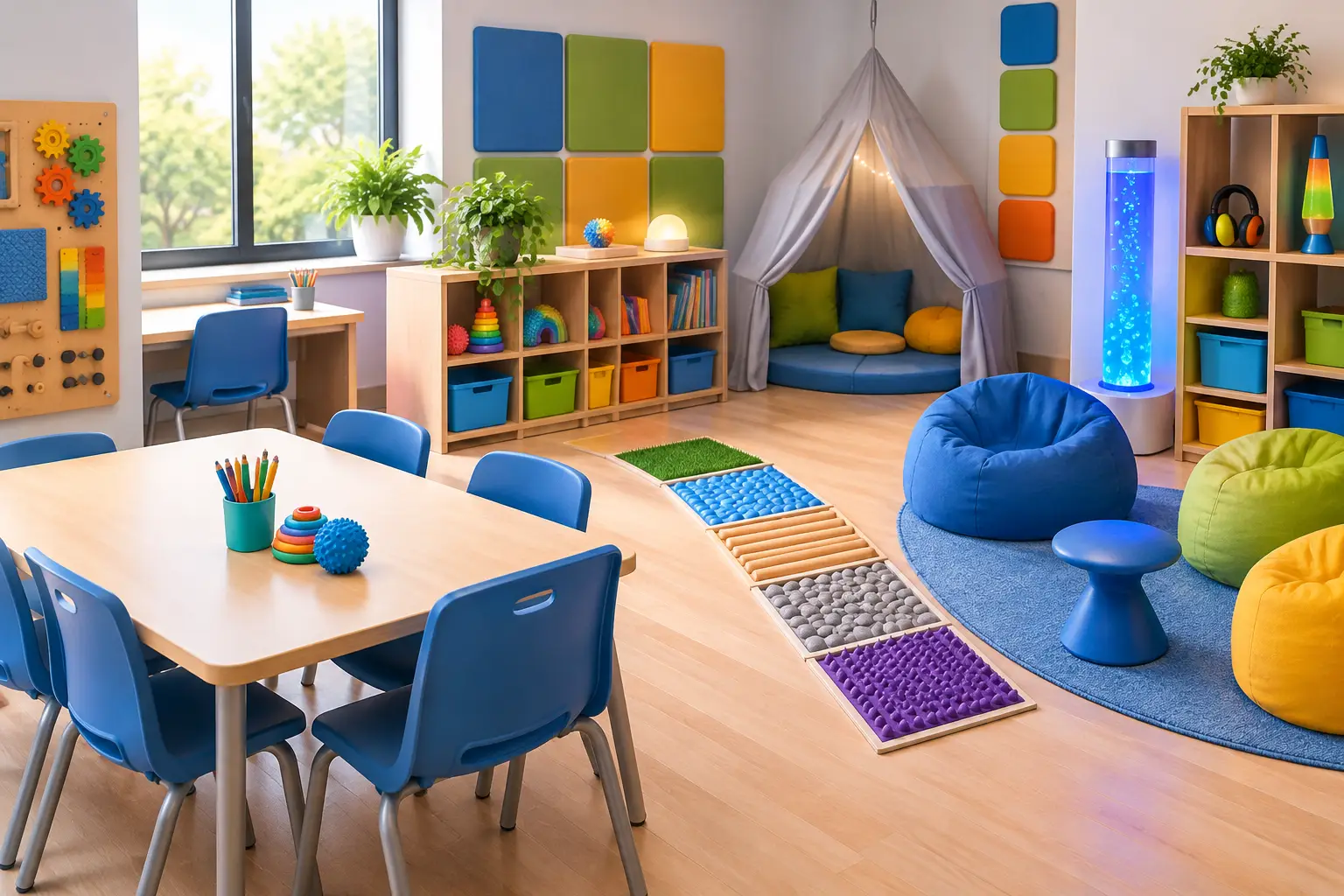
A child who covers their ears during assemblies, melts down after lunch, cannot stay seated through independent work, or shuts down under fluorescent lights is not necessarily being defiant. They may be communicating a sensory need the school has not addressed. Sensory classroom supports are not rewards, extras, or behavior-management shortcuts. When a sensory barrier interferes with a student’s ability to learn, participate, regulate, or remain safely in class, the school must take that barrier seriously.
For families, the challenge is often that schools describe a child’s needs in vague terms: “They need breaks,” “They have trouble focusing,” or “We will try to help.” Vague language produces inconsistent support. Your child needs a clear plan that identifies what happens, when it happens, who is responsible, and how the team will know whether the support is working.
What Sensory Needs Can Look Like at School
Sensory processing differences do not look the same in every child. One student may seek movement, pressure, or sound. Another may avoid noise, touch, visual clutter, particular fabrics, smells, or crowded transitions. A child may appear calm all day and then unravel at dismissal because they have spent hours trying to tolerate an overwhelming environment.
School staff sometimes mistake sensory dysregulation for refusal, inattention, aggression, anxiety, or poor motivation. Those concerns may be present, but the team should not stop there. The right question is not, “How do we make this child comply?” It is, “What is getting in the way of this child accessing instruction and participating with peers?”
Look for patterns. Does the difficulty happen in the cafeteria, on the playground, during handwriting, in loud group work, or after a schedule change? Does it worsen at a certain time of day? Is your child avoiding an activity because it is hard, or because their body is signaling that it is too much? Specific observations give an IEP or 504 team something concrete to address.
Sensory Classroom Supports Must Be Individualized
There is no universal sensory toolkit that works for every student. A weighted lap pad may help one child feel grounded and distract another. Noise-reducing headphones may make an assembly manageable for one student but should not become a reason to isolate them from instruction. Movement breaks can support regulation, yet a generic “take a walk” plan may fail if the child needs an adult, a predictable route, or a specific time before escalation.
Effective supports connect directly to a documented need and a school task. For example, a student overwhelmed by cafeteria noise may need access to a quieter eating area, noise-reducing headphones, or a structured lunch transition. A student who struggles to maintain their body in a chair may need flexible seating, a foot support, scheduled movement, or occupational therapy consultation. A student overloaded by visual clutter may benefit from reduced materials on the desk, visual boundaries, or simplified directions presented one step at a time.
The support itself matters, but the conditions matter just as much. “Access to breaks as needed” can sound helpful while leaving a child to negotiate with every adult. A stronger plan identifies the signs that trigger a break, the location, the length, supervision if needed, and the process for returning to instruction. It should protect your child’s dignity rather than make support feel like punishment or exclusion.
When Supports Belong in an IEP or 504 Plan
If sensory needs affect your child’s educational performance or access to school, raise the issue formally. Do not assume an informal teacher accommodation will continue after a staff change, transition to a new grade, or difficult day. Informal cooperation is welcome, but it is not a substitute for a documented plan when your child depends on the support.
An IEP may be appropriate when a student needs specially designed instruction, related services, measurable goals, or a coordinated plan to make progress in the curriculum. Occupational therapy may be considered when it is necessary for the student to benefit from special education. A diagnosis alone does not automatically create eligibility, but the school must consider how the disability-related needs affect education.
A Section 504 plan may be appropriate when a student has a disability that substantially limits a major life activity and needs accommodations to access school. Sensory-related barriers can affect concentrating, thinking, communicating, learning, eating, sleeping, and other activities. The exact pathway depends on your child’s circumstances, so do not let a school dismiss the concern simply because your child earns passing grades. Grades are only one piece of access.
What to Bring to the Meeting
Parents are often told that the team needs “data,” as if family experience does not count. Your observations are data. Bring a short written record that shows the pattern over time. Include dates, settings, triggers, what your child did, how adults responded, and what helped or failed.
If available, bring reports from medical providers, therapists, or evaluators. These documents can be useful, but do not wait for a perfect outside report before requesting help. You can also share photos of classroom work, messages from teachers, behavior records, attendance concerns, and your child’s own description of what school feels like.
Ask the team direct questions: What sensory demands are present in the settings where my child struggles? What supports have been tried, for how long, and with what results? Who will implement the support consistently? How will we measure whether it improves access, participation, or regulation?
If the school says a request is not possible, ask for the reason in writing. “We do not do that here” is not an individualized answer. Schools may have legitimate concerns about safety, disruption, staffing, or feasibility, but those concerns should lead to problem-solving, not a dead end.
Avoid Plans That Depend on Your Child Failing First
Too many sensory plans begin only after a student is already in crisis. By the time a child is crying, bolting, yelling, shutting down, or refusing work, their nervous system may be far beyond what a simple reminder can fix. Reactive support has a place, but prevention should come first.
A strong plan considers the full school day. It may include a visual schedule before transitions, movement before a long seated activity, access to sensory tools without public attention, previewing drills or special events, and a predictable calming space that is not used as discipline. For some students, staff training is necessary. A support written into a plan is ineffective if the adults responsible for implementing it do not understand why it matters.
Be cautious about sensory rooms or calming spaces that become a place where children are sent whenever adults find their behavior difficult. A regulated space can be valuable. It should not replace instruction, become an involuntary exclusion, or reduce expectations without a clear educational purpose. Ask how often your child will use it, how missed work will be handled, and how the team will avoid making separation the default response.
Put Accountability Into the Language
The wording of the plan determines whether the support is dependable. Compare “student may use headphones” with “student will have access to noise-reducing headphones during assemblies, fire drills, independent work when classroom noise interferes with concentration, and other identified high-noise activities.” The second statement gives staff direction and gives you a basis for follow-up.
The same applies to sensory breaks. A plan should identify whether breaks are scheduled, student-initiated, staff-prompted, or all three. It should name where the child goes, what tools are available, how long the break lasts, and how staff will support reentry. If a behavior plan is involved, make sure sensory triggers and preventive strategies are included rather than treating every dysregulated response as willful misconduct.
Request a review date. Supports should be adjusted based on evidence, not removed because an adult believes your child should be “used to it” by now. Improvement may mean fewer crises, greater time engaged in instruction, smoother transitions, better attendance, or a child who comes home less exhausted. Those outcomes matter.
Your child should not have to prove their distress by reaching a breaking point at school. Clear, individualized sensory supports can protect access to learning and preserve dignity at the same time. When the system offers vague promises, bring the conversation back to the barrier, the specific support, and the accountability your child deserves.
Personal 1:1 advocacy
Need Help Applying This to Your Child's Situation?
Russell can review the actual records, identify what the school or agency is missing, and help you prepare the strongest next move.
Federal requirements provide a baseline. State law, regulations, guidance, and timelines may differ. This page provides educational advocacy information, not legal advice.
Return to top