

Plans, services, and placement
IEP Progress Tracking That Holds Schools Accountable
IEP progress tracking helps parents see whether services are working, spot missed goals early, and ask the school for clear, timely action for their child.
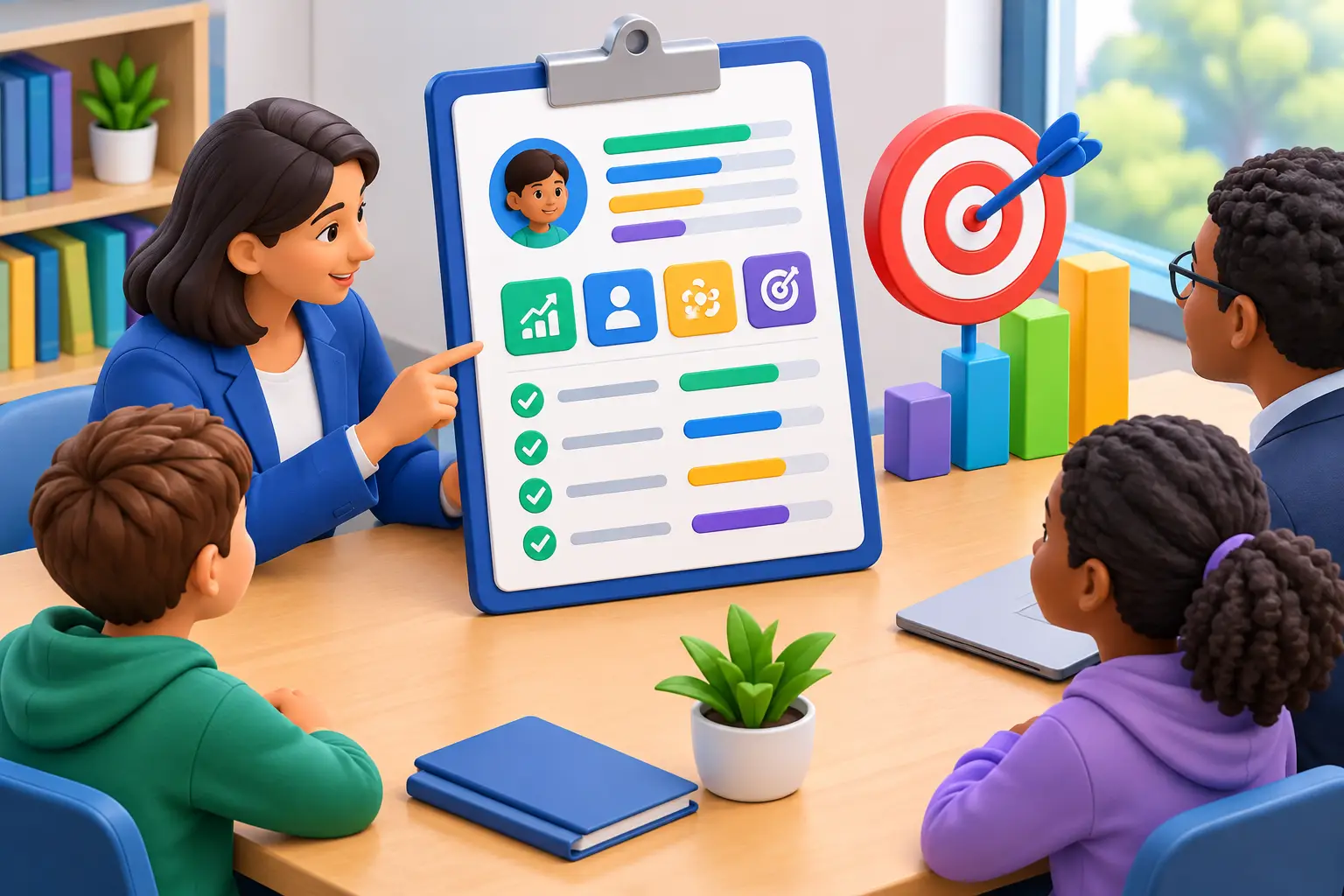
A progress report that says “making progress” is not enough when your child is still struggling to read, communicate, regulate behavior, or access the classroom. IEP progress tracking gives you a way to move beyond vague reassurances and ask a much more meaningful question: Is the school’s plan producing measurable results for my child?
Your child’s IEP is not a promise to try. It is a written plan for special education, related services, accommodations, and goals designed to provide meaningful educational benefit. If the school cannot show how it is measuring progress toward those goals, families have every reason to ask for answers.
What IEP Progress Tracking Should Tell You
Under the Individuals with Disabilities Education Act, an IEP must explain how your child’s progress toward annual goals will be measured and when periodic progress reports will be provided. Those reports must generally be issued at least as often as parents of students without disabilities receive report cards. State and district rules may add more requirements.
But receiving a report is not the same as receiving useful information. A meaningful progress report should tell you where your child started, what skill is being measured, what data the school collected, and whether your child is moving toward the annual goal.
For example, “Jordan is improving in reading” is an opinion. “Jordan reads 72 correct words per minute on a fourth-grade passage, up from a baseline of 48, across three weekly probes” is data. The second statement gives you something you can understand, question, and use in an IEP meeting.
Progress tracking should also help you see whether the services in the IEP are actually being delivered. A child cannot make expected progress on speech, reading intervention, counseling, occupational therapy, or behavioral support if sessions are regularly missed, shortened, or provided by someone without the required qualifications.
Start With the IEP, Not the Report Card
Before you evaluate progress, pull out the current IEP. The annual goals are the center of the conversation. Every goal should identify a skill, a starting point or baseline, a way to measure progress, and a target for achievement.
A goal that says your child will “improve behavior” is too broad to monitor effectively. A stronger goal identifies the specific behavior, the conditions, the measurement method, and the expected level of success. For instance, it may state that, given a visual schedule and a prompt, your child will transition between activities with no more than one adult reminder in four out of five opportunities.
If a goal has no baseline, unclear criteria, or no stated method of measurement, flag it. You cannot tell whether a child has grown when no one established where they began. You also cannot hold a team accountable to a goal that could mean almost anything.
The IEP should tell you whether progress is measured through work samples, curriculum-based assessments, observation data, behavior logs, therapy records, or another defined tool. There is no single best method. The right method depends on the goal. What matters is that the method fits the skill and is used consistently.
Separate Grades From Goal Progress
A passing grade does not automatically mean your child is meeting IEP goals. Grades can reflect participation, effort, modified assignments, extra credit, or classroom supports. A child may earn a C in English while making little progress in decoding, written expression, or reading comprehension.
The reverse can also happen. A child may be making real progress toward an IEP goal but still need significant support to meet grade-level expectations. Both pieces of information matter. Do not let the school use a report card as a substitute for goal-specific data.
Build a Simple Parent Tracking File
You do not need a complicated spreadsheet to become organized. You need a system you can maintain when life is already full. Keep one folder, paper or digital, with the current IEP, progress reports, report cards, evaluations, service schedules, attendance records, emails, and samples of your child’s work.
For each annual goal, create a simple running note. Record the baseline, the annual target, each progress-report date, the score or observation reported, and any explanation the school gives. Include missed services or changes in providers when you learn about them.
This record becomes powerful over time. It can reveal a pattern that is easy to miss in isolated meetings: the same goal carried forward year after year, progress reports with identical language, services that disappear during staffing shortages, or a sudden drop in performance after an accommodation was removed.
Keep notes about what you see at home, too. Parents are not expected to replace school data collection, but your observations matter. If your child is spending three hours on homework despite an accommodation for reduced workload, having daily meltdowns after school, or saying they never receive extended time on tests, write it down with dates and examples.
Ask for the Data Behind the Words
When a progress report is vague, do not accept “the teacher is seeing improvement” as the final answer. Request the data used to measure the goal. A written request is usually best because it creates a clear record.
You can ask direct questions such as: What data was collected for this goal? How often was it collected? Who collected it? What does the data show compared with the baseline? Is my child on track to meet the annual goal by the end of the IEP year?
You may also ask for copies of progress-monitoring charts, behavior data, work samples, therapy notes, assessment results, and service logs. Schools may need reasonable time to respond, and local procedures vary, but you do not need to wait quietly until the next annual review if the information you receive does not make sense.
Be specific. A broad demand for “all records” can slow down a response. Asking for “the reading fluency probes and scoring records used to report progress on Goal 2 from September through January” tells the school exactly what you need.
Watch for These Warning Signs
One weak progress report is not always proof that an IEP is failing. Staff changes, illness, testing windows, and a child’s uneven learning profile can affect data. Still, certain patterns deserve immediate attention:
- Progress is reported as satisfactory, but no numbers, work samples, or observations support that conclusion.
- The same goal appears year after year with minimal change in the target or service plan.
- Your child is not on track to meet the goal, yet the team offers no adjustment to instruction, services, accommodations, or supports.
- The school says it cannot provide data because it was not collected, the provider left, or the program changed.
- Related services are missed or inconsistent, but there is no plan to make up the lost instruction or therapy.
These are not small paperwork problems. Missing data can prevent the IEP team from making sound decisions. Missed services can directly affect your child’s progress.
When Progress Stalls, Request an IEP Meeting
You do not have to wait for the yearly IEP meeting when goals are not being met. A parent can request an IEP team meeting in writing to review the data and determine whether changes are needed.
Go into that meeting with a focused purpose. Bring the current goal, the school’s progress reports, your parent tracking notes, and the specific data you requested. Ask the team to explain why progress has stalled and what it will do differently.
The answer may involve more intensive specialized instruction, a different teaching approach, additional related-service time, a behavior assessment, stronger accommodations, assistive technology, updated evaluations, or a revised goal. It depends on the child and the evidence. More services are not automatically the answer if the current instruction is poorly matched to your child’s needs. But doing the same thing after the data shows it is not working is not an acceptable plan.
Ask that proposed changes be written into the IEP, including who will provide them, how often, where they will occur, and how the team will measure whether the change is helping. Verbal assurances disappear. Written commitments create accountability.
If the school refuses to change the IEP, ask for prior written notice. This document should explain what the district is refusing, why it made that decision, what information it relied on, and what options were considered. It is an important safeguard, especially when the school’s position does not match the data.
Progress Data Is an Advocacy Tool
IEP progress tracking is not about catching a teacher making a mistake. Most educators want children to succeed and are working within demanding systems. It is about making sure your child does not get lost in that system because no one stopped to ask whether the plan was working.
Families are often told to be patient. Patience can be appropriate when data shows a child is progressing and the team has a clear plan. It is not a substitute for action when progress reports are empty, services are inconsistent, or goals have become a holding pattern.
Your child deserves more than a report that sounds reassuring. They deserve an IEP team that can show its work, respond when the data raises concerns, and adjust the plan without excuses, delays, or limits. Keep the records, ask the hard questions, and insist that progress be measured in a way that protects your child’s right to learn.
Personal 1:1 advocacy
Need Help Applying This to Your Child's Situation?
Russell can review the actual records, identify what the school or agency is missing, and help you prepare the strongest next move.
Federal requirements provide a baseline. State law, regulations, guidance, and timelines may differ. This page provides educational advocacy information, not legal advice.
Return to top