

Parent advocacy and communication
How to Make an Assistive Technology Request
An assistive technology request can help your child access learning. Learn how to ask, document needs, and hold the school accountable when schools delay help.
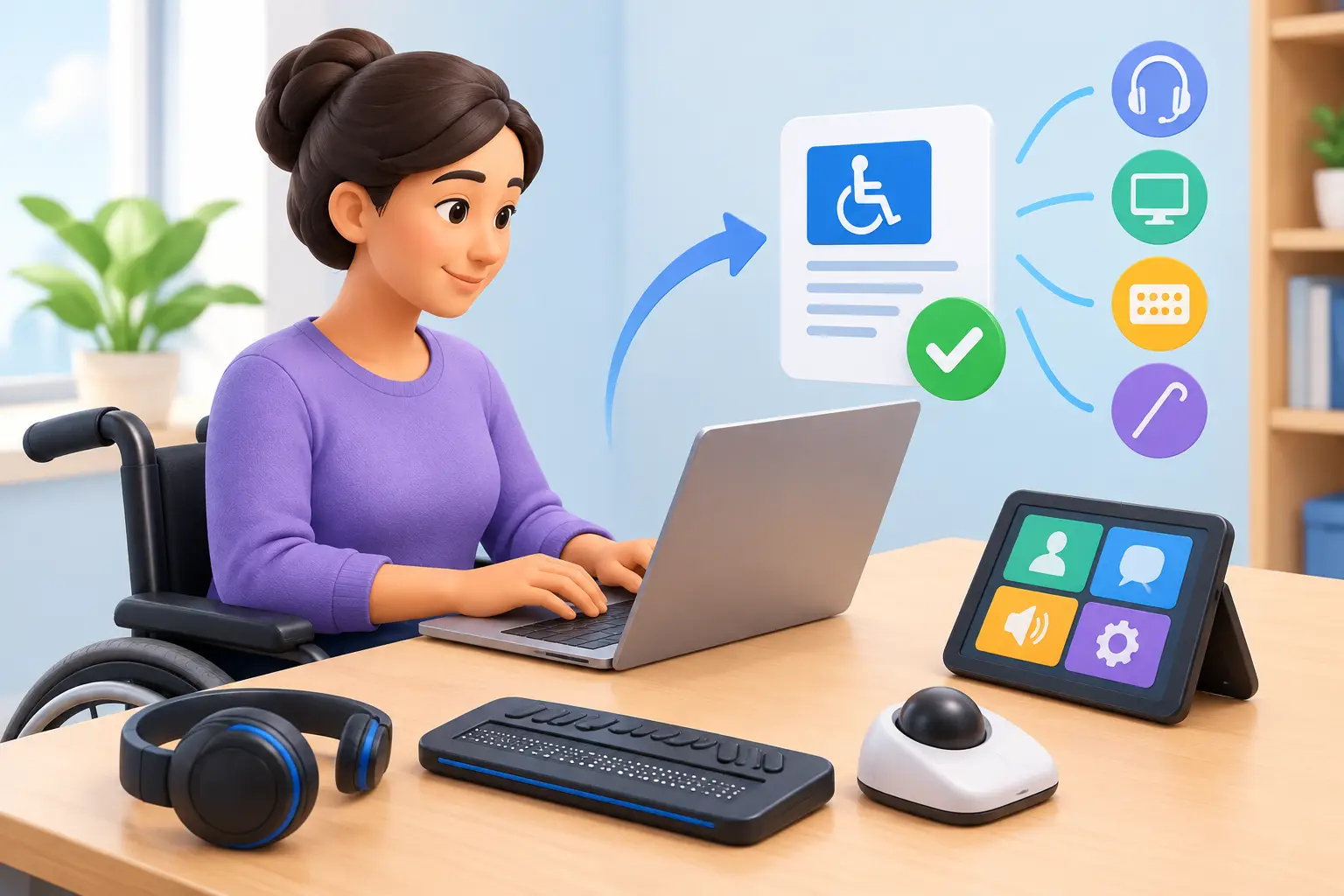
A child who cannot reliably read, write, communicate, organize, or show what they know is not failing because they lack effort. They may be missing the tools that give them real access to school. An assistive technology request is how you put that need in front of the school formally and require the team to consider what support your child needs to participate and make progress.
Do not let anyone reduce assistive technology to an expensive device or tell you your child must be failing before the school can consider it. Assistive technology can be low-tech, high-tech, simple, or specialized. What matters is whether it helps your child access their education.
What an assistive technology request should accomplish
Under the Individuals with Disabilities Education Act, assistive technology devices and services must be considered for every child with an IEP. That does not mean every child needs a tablet, speech-generating device, or specialized software. It does mean the IEP team has a responsibility to look at the barriers your child faces and determine whether tools or services are needed for a free appropriate public education.
An effective request is not simply, “My child needs an iPad.” It connects a specific barrier to a specific educational task. For example, a child with dysgraphia may understand classroom material but be unable to produce readable written work at the pace expected. Speech-to-text, word prediction, or access to a keyboard may allow that child to demonstrate knowledge without handwriting becoming the barrier.
The same principle applies to communication, reading, math, organization, sensory regulation, mobility, and vision or hearing access. The right tool depends on the child, the setting, and the task. A tool that works well at home may not be the best fit in a busy classroom. That is why the school must evaluate the need instead of making assumptions.
Start with the barrier, not the device
Schools sometimes move quickly to defend what they already provide. Your job is to keep the conversation focused on your child’s access and progress. Describe what is happening in concrete terms.
Instead of saying, “My child struggles with writing,” say: “My child can explain answers aloud but produces only one or two incomplete written sentences during a 30-minute assignment. The amount of handwriting required prevents them from showing what they know.” That gives the team something measurable to address.
Bring examples whenever possible. Work samples, teacher comments, incomplete tests, behavior logs, grades, therapy notes, and your own observations can show a pattern. You do not need a private diagnosis or an outside expert report before asking the school to consider assistive technology. Those documents can help, but the school already has a duty to respond when a disability-related need affects access.
Think about the school day from beginning to end. Where does your child get stuck? Is it copying from the board, decoding text, following multi-step directions, taking notes, initiating communication, completing homework, moving through the building, or managing materials? The more clearly you identify the barrier, the harder it is for the team to offer a vague promise instead of a real solution.
Put your assistive technology request in writing
A verbal conversation can disappear into meeting notes or be misunderstood later. Send your request in writing to the IEP case manager, special education administrator, and principal if appropriate. Keep the tone direct and factual.
State that you are requesting the IEP team consider assistive technology and, if needed, conduct an assistive technology evaluation. Briefly explain the educational barriers you are seeing and identify any tools, strategies, or services you want the team to consider. You are not required to know the exact device. You are asking the school to investigate what will work.
You can write something like this:
> I am requesting that the IEP team consider my child’s need for assistive technology devices and services. My child is experiencing difficulty with [specific educational task], which is affecting [access, participation, or progress]. I am requesting an assistive technology evaluation to determine what tools, training, and supports are needed for my child to access the curriculum and demonstrate knowledge.
Ask for a written response and request an IEP meeting if the issue cannot be resolved promptly. Save a copy of every email, letter, evaluation, meeting notice, and response. Documentation protects your child when delays begin.
Ask for an evaluation, not a trial that goes nowhere
A school may offer to let your child “try” a tool before evaluating. A short trial can be useful, but it should not become an endless waiting period with no data, no timeline, and no decision. If the school proposes a trial, ask who will implement it, how success will be measured, how long it will last, and when the team will meet to review results.
A meaningful assistive technology evaluation looks beyond a device. It considers your child’s skills, environments, tasks, and the supports needed to use the tool successfully. It may involve a special educator, occupational therapist, speech-language pathologist, teacher of the visually impaired, or another professional with relevant expertise.
Training matters. Handing a student a tool without teaching them how to use it is not support. The IEP may need to include training for your child, staff members, and sometimes family. It may also need to specify when and where the technology will be available. A communication device that stays locked in a cabinet or text-to-speech that is only offered during one class is not meaningful access.
Make sure the IEP says what will actually happen
If the team agrees that assistive technology is needed, do not accept a vague statement such as “technology available as needed.” Ask questions until the service is clear.
The IEP should identify the device, software, low-tech tools, or services your child needs. It should also explain who will provide them, in which settings, and how the team will monitor whether they are helping. If your child needs speech-to-text for written assignments, does that include classroom work, tests, homework, and state assessments where permitted? If your child needs a visual schedule, who updates it and ensures it follows them across settings?
There can be legitimate limits. Some tools may not be appropriate for every assignment, and accommodations may differ for classroom instruction and standardized testing. But limits must be based on your child’s individual needs, not on staff convenience, budget pressure, or a blanket school rule.
Ask how progress will be measured. If the purpose is to increase written output, reduce fatigue, improve reading comprehension, or support communication, the team should collect data that shows whether the support is working. If it is not, the answer is not to blame the child. The team may need to adjust the tool, the training, or the implementation.
When the school says no or delays action
A refusal does not end the conversation. If the school declines your request, ask for prior written notice. This is a formal explanation of what the school refused, why it refused, what information it relied on, and what options it considered. You need that record.
Do not accept statements like “We do not have that program,” “We do not provide devices for home,” or “Your child is doing fine without it” as the final word. Schools cannot deny an individually needed support simply because it is not currently on hand or because it would be easier to keep doing things the old way.
If the school insists your child does not need an evaluation, ask what data supports that position. If it completes an evaluation you believe is inadequate, you may have the right to request an independent educational evaluation at public expense. Procedural safeguards, mediation, state complaints, and due process are options when informal advocacy fails, though the right next step depends on the facts and your state’s rules.
Before escalation, make one more effort to bring the issue back to the evidence: the barrier, the missing access, the requested evaluation, and the school’s legal responsibility to provide individualized support. Stay firm. Your child should not lose months of learning because adults are reluctant to act.
Keep watching after the tool arrives
Assistive technology is not a one-time purchase. Children grow, coursework changes, and needs shift. A tool that was effective in elementary school may no longer be enough in middle school. Review the support at least annually and sooner if your child is still struggling.
Pay attention to whether your child is actually using the tool independently, whether teachers honor it consistently, and whether it produces better access rather than more frustration. YourChild.org exists because families should not have to accept excuses, delays, or limits when their child needs support. Bring the evidence, put the request in writing, and keep the focus where it belongs: on what your child needs to learn, participate, and be heard.
Personal 1:1 advocacy
Need Help Applying This to Your Child's Situation?
Russell can review the actual records, identify what the school or agency is missing, and help you prepare the strongest next move.
Federal requirements provide a baseline. State law, regulations, guidance, and timelines may differ. This page provides educational advocacy information, not legal advice.
Return to top